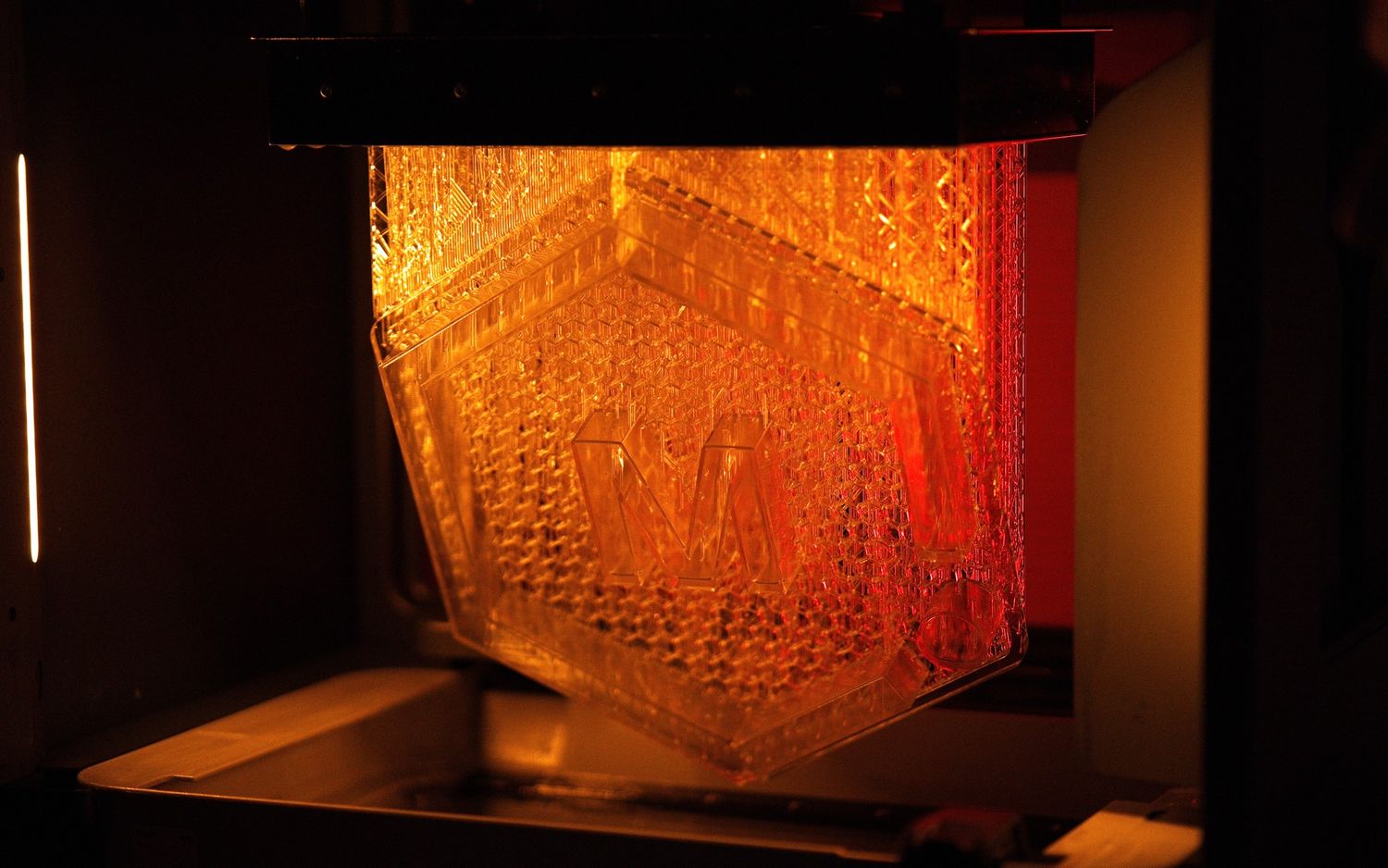
Tech Breakdown: Formlabs Form 4L
A close look at the Formlabs Form 4L, from its Low Force Display print engine to what it's like to run a 24.2 L build capacity resin printer.

Years ago, Formlabs brought large-format resin printing within reach of ordinary product design and engineering shops. Full size, single piece parts were finally possible with the precision of Formlabs SLA printing. There were drawbacks to printing large parts though, and convenience came at a cost. Large print jobs could run for days.
The Formlabs Form 4L provides the best of both worlds. Rated at 2 to 4 times faster than the previous generation, with 13% more room and more affordable materials and consumables, there's no longer a premium on large-format resin printing. The build volume is 353 × 196 × 350 mm, or 24.2 L. Compared to its smaller sibling, the Form 4L has 4.6 times the build volume of a Form 4.
The Form 4L is now an even better value than the Form 4, providing more build area, faster print times per part, without requiring parts to be split up to fit into the Form 4's build area.
How the Low Force Display Engine Works
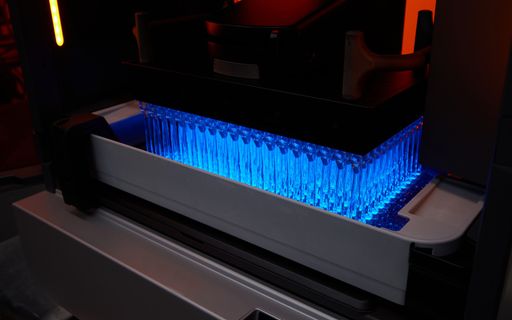
The Form 4L cures each layer of a print in a similar way to how an LCD television displays a picture. A grid of lights shine against the back of a screen, which blocks the light everywhere except where the image should shine through. In the case of an SLA 3D print, the "image" is a single cross section of the part, which is cured as the light is absorbed by resin.
The grid of lights in our example is called the Backlight Unit, with 145 LEDs behind collimating lenses for an optical power intensity of 16 mW/cm². Collimated light travels straight instead of fanning out, and Formlabs credits it with keeping print quality and accuracy consistent anywhere on the build platform.
The screen in our example is the Light Processing Unit (LPU). Polarizers and optical coatings work with a custom LCD to mask the light into the shape of the current, cross sectional layer. Its pixels are only 46 microns across, and come with a factory-tuned anti-aliasing profile. Formlabs pairs that with pixel smoothing for sharp detail and smooth surfaces.
Separation is the other half of the engine. As on the Form 4, a release texture on the LPU lets air in as the Z axis lifts each cured layer, so suction can't build up between the tank and the printer. The flexible film in the resin tank then peels away gently from the edges of the layer. Less force on each layer means higher success rates on intricate parts with thin walls or small supports.
Speed on Big Parts and Full Platforms
Curing an entire layer at once with this new process is why the print times have been able to be reduced so drastically. In older generations of SLA resin printers, a laser traced each shape, so a crowded layer had more lines to draw and took longer than a less crowded one. The Form 4L exposes the whole layer in an instant, regardless of much of the platform is utilized.
While the exposure time for a layer of 100 parts or just one takes the same amount of time, layer time can vary. Adjustments in timing and speed need to be made to the rest of the layer cycle, like the "peel" or vertical lift between each layer. When comparing print times, crowded platforms may take longer per batch, but far less time than if the same number of parts were spread over several jobs.
When comparing print times between a full or empty build plate, Formlabs' slicer PreForm shows the differences a full platform has in total time. The part was a Rigid 10K Resin mold, sliced at 100 micron layers into 762 layers. PreForm estimated a single mold at 2 h 57 min and a full Form 4L platform of 68 molds at 4 h 48 min. That is 67 additional parts for about 1 h 51 min more time.
A full Form 4 platform holds 24 of the same molds, estimated at 3 h 4 min. Getting 68 molds out of a Form 4 takes 3 jobs, about 9 hours of printing plus two more rounds of unloading and restarting.
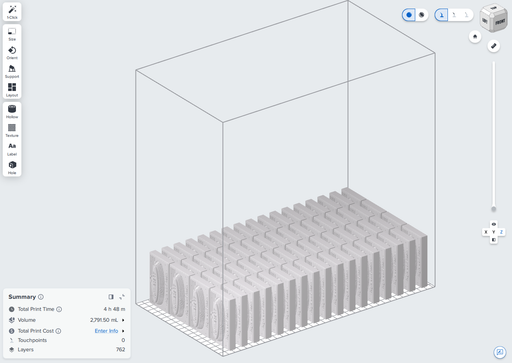
about 4 h 45 min.
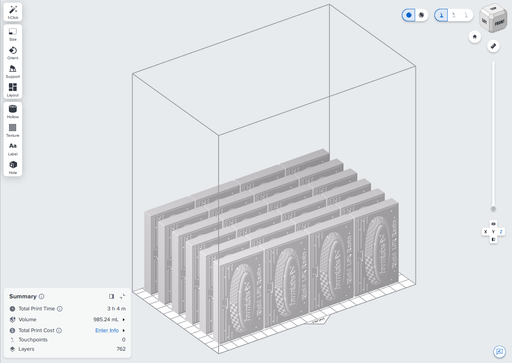
about 3 h 4 min.
What a 24.2 L Build Volume Enables
Radio Flyer printed a Stingray ride-on seat on its Form 4L soon after it arrived, and took that exact part into a vendor meeting. The design team now prints parts it would otherwise cut on a CNC router or piece together from SLS sections.
At Archer Aviation, the design manager estimates the big parts needed for their workflow now only take about 12 hours on the Form 4L, against 35 hours on an older machine. That leaves room for last-minute requests and design changes when needed.
At Brose, the seat division's prototyping team prints setup parts for a weld cell in hours instead of overnight.
The range of compatible materials from Formlabs can unlock a wide range of possibilities in the design process. The Form 4L runs 23 Formlabs resins, from general purpose and impact resistant grades to elastomers and casting resins.
For anything else, Open Material Mode opens the printer to third-party 405 nm photopolymer resins.
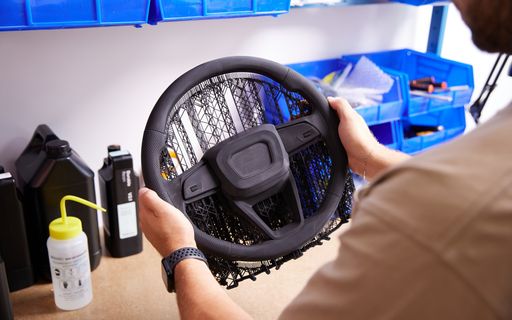
How the Form 4L Reduces Operating Expenses
Platform area and build volume are the most important considerations when choosing between the Form 4L and Form 4. The Form 4L's 353 × 196 mm platform covers about 692 cm². The Form 4's 200 × 125 mm platform covers 250 cm². Per unit of platform, the two now cost about the same.
The resin tanks for either machine are rated for 75,000 or more layers with any Formlabs resin, roughly 190 prints with an average 39 mm tall model at 100 microns. Older tanks were rated for 250 to 800 hours of printing, or 10 to 35 weeks in contact with resin, depending on the material.
Printing large parts or massive batches can make swapping cartridges a frequent task. Using the Formlabs Resin Pump unlocks bulk pricing on resin and reduces the frequency of material refills.
Labor is the cost that can easily be overlooked when pricing out a run of parts. Everything printed on one platform comes off together, so it washes and cures as one batch. The Form Cure L V2 takes parts up to 350 mm tall on a 40.4 cm turntable. Formlabs rates it for 5 to 6 times faster post-curing than the previous Form Cure L, and preinstalled profiles for each Formlabs material simplify the post-processing workflow.
What Keeps a Long Print on Track
The Form 4L's reliability and repairability were primary goals during development. Every Form 4L goes through a 60-point calibration and quality control inspection at the factory.
Once a job starts, 6 integrated sensors watch the resin's temperature and level, the forces on each layer and the state of the print. Each system guards against a common way large prints fail:
- Conduction heating with infrared temperature sensing holds the resin at 25 to 45 °C (77 to 113 °F), depending on the material. A steady temperature keeps the resin behaving the same way from the first layer to the last.
- A Z-axis force sensor tunes print speed and quality to the geometry of the part and the material in the tank.
- A mechanically coupled mixer stirs faster and handles higher-viscosity resins, which opens the door to high-performance materials.
- Faster, more reliable cartridge dispensing keeps a long job from pausing partway through.
- An integrated 5 megapixel camera lets someone check on a print from anywhere, and maintenance reminders flag upkeep before it turns into a failure.
Accuracy matters more as parts get bigger, because a small percentage error turns into a visible gap. With Grey Resin V5, Formlabs reports typical XY tolerances of ±0.15% for features 1 to 30 mm long.
Radio Flyer reports that it can now print massive enclosures filling the whole build volume. This was impossible to print with older machines, where a box that size would not be accurate enough to fit its own lid.
When the Form 4 Is the Better Choice
The Form 4L is not the right printer for every shop.
For a single part, the Form 4 can be quicker. A designer iterating on one small prototype at 100 micron layers may get each version back a little sooner from the smaller machine.
Size and weight count too. For tighter workshops and print labs, a smaller machine might be the only option that fits into the space.
The Form 4L earns its footprint when parts outgrow the Form 4's smaller 200 × 125 × 210 mm build volume. It also earns it when batches or multiple parts are all needed at once.
Specifications Comparison Table
Specification |
Form 4L |
Form 4 |
|---|---|---|
| Technology | Masked SLA (Low Force Display) | Masked SLA (Low Force Display) |
| Build volume | 353 × 196 × 350 mm | 200 × 125 × 210 mm |
| Build capacity | 24.2 L | 5.2 L |
| Pixel size | 46 microns | 50 microns |
| Layer thickness | 25 to 200 microns | 25 to 300 microns |
| Light source | 145 LEDs, 405 nm | 60 LEDs, 405 nm |
| Maximum print speed | 80 mm/h | 100 mm/h |
| Resin cartridges | 2 | 1 |
| Weight | 58.5 kg (129 lb) | 18.3 kg (40.4 lb) |
The Form 4L takes the slowest part of large-format resin printing and brings it down to a working day. Per square centimeter of platform, it now costs about the same as the smaller Form 4.
To see how the Form 4L would handle a specific part or production run of your parts, get in touch with MatterHackers today.